
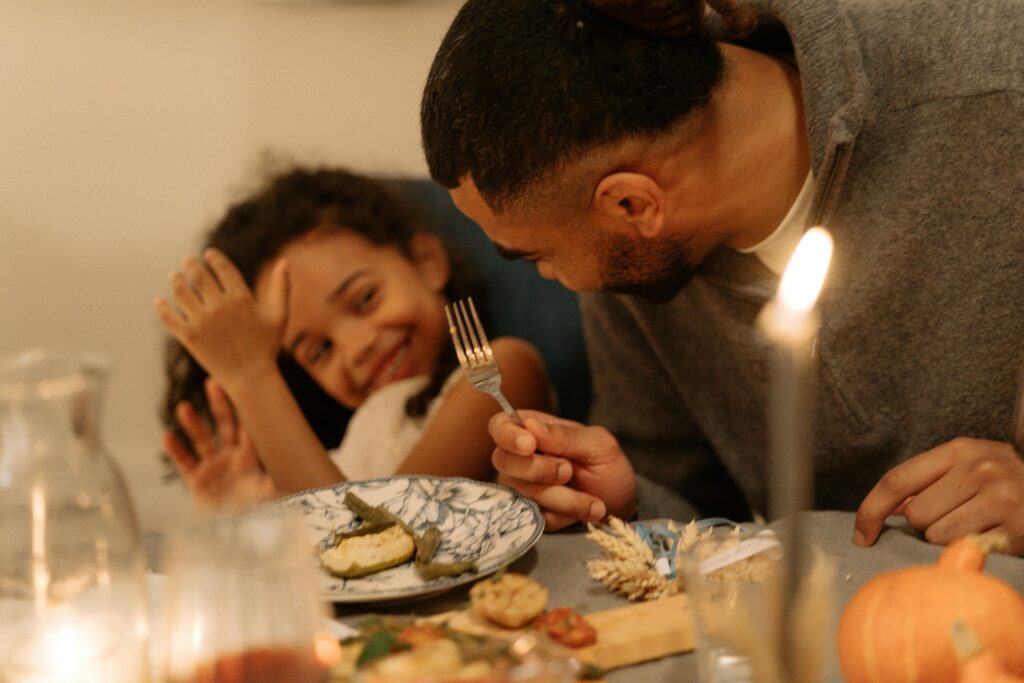
 Gratitude does not arrive loudly in early childhood. It does not announce itself through rehearsed “thank you” or perfect manners. Instead, it enters quietly through rhythm, repetition, and relationship.
In the early years of life, children are not learning what to think but how to be. Between the ages of two and six, the children absorb the world not through instruction, but through experience. Gratitude, therefore, is not something to be taught as a concept. It is something to be lived into: slowly, gently, and consistently.
In a Montessori environment, this understanding feels deeply familiar. Just as we prepare the physical environment with intention, we must also prepare the emotional one. Gratitude grows best in spaces where the child feels safe, respected, and deeply seen.
Gratitude Begins With Belonging
For a young child, gratitude does not begin with appreciation for objects. It begins with a sense of belonging.
When a child feels:
- welcomed rather than rushed
- listened to rather than corrected
- included rather than instructed
They begin to internalise a quiet knowing: I have enough. I am held.
This inner security becomes the soil from which gratitude naturally grows.
Rather than asking children to “be grateful,” we allow them to experience gratitude through warmth, care, and consistency.
The Adult as the Living Lesson
In Montessori philosophy, the adult is the guide, and also the model.
Children absorb not what we tell them, but how we move through the world.
When adults pause to notice:
- the taste of food
- the calm of a shared moment
- the effort behind a task
Children learn that life is worthy of attention.
A softly spoken “I enjoyed sitting with you today” or “This feels peaceful” teaches more about gratitude than any instruction ever could.
Individual Practices That Invite Awareness
- Naming Joy Instead of Demanding Thanks
For young children, the language of gratitude is best framed as reflection, not obligation.
Instead of asking, “What are you thankful for?” we may ask:
- “What did you enjoy today?”
- “What felt good?”
- “What made you smile?”
These questions invite awareness without pressure. A single-word answer is enough. The practice is in the noticing.
- Gratitude Through the Senses
Children between two and four live through their senses.
Inviting them to feel the warmth of water, the crunch of fruit, or the texture of leaves helps them experience appreciation in the body before the mind ever names it.
A gentle adult observation: “That feels nice, doesn’t it?”, plants the seed.
- Caring for Life
When a child waters a plant or feeds a bird, gratitude takes root through responsibility.
The child learns:
- My actions matter
- Life responds to care
- I am part of something living
This is gratitude in its purest form: relational, not performative.
Gratitude as a Family Rhythm
Gratitude becomes a way of life when it is woven into the daily rhythm of the family.
Simple shared practices make it visible:
- A short reflection before bedtime
- A family member naming something they appreciated
- A shared pause before meals
These moments need not be elaborate. Their power lies in repetition.
Contribution as Appreciation
In Montessori homes, children are not rewarded for helping; they are needed.
Setting the table, folding cloths, or helping prepare food allows children to experience gratitude from both sides: giving and receiving.
When adults say, “Thank you for helping our family,” children learn that gratitude flows through contribution, not praise.
Gratitude and Difficult Feelings
Gratitude is not the absence of discomfort.
When children are allowed to feel disappointment, sadness, or frustration without correction, they learn emotional honesty. From this place of safety, gratitude eventually re-emerges not as denial, but as grounding.
“We are together. You are safe.”
This, too, is gratitude.
Growing What Already Exists
Gratitude does not need to be added to childhood. It already exists in wonder, curiosity, and presence.
Our role as parents and educators is not to insert it, but to protect it.
When childhood is allowed to unfold slowly, gratitude finds its way in, quietly shaping the inner life of the child for years to come.
## About the Author ##
Mukhpreet Singh Khurana is a poet and writer whose gentle free verse explores gratitude, mindfulness, mental health, and spiritual growth, turning life’s quiet moments into reflections of hope and awareness.
Through his books, the long-running Gratitude Broadcast, and the Spotify podcast Simply Here!, he inspires simple, sustainable positivity rooted in compassion.
Based in Hyderabad, India, and honoured with the 2025 International Author Excellence Award for Rubaru, he shares poetry and reflection on Instagram - https://www.instagram.com/mukhpreetkhurana/